

Most people assume crypto is private by default. But it's not. Every transaction on a public blockchain is visible: the amount, the addresses involved, the timestamp.
This guide covers what's actually trackable, what privacy in crypto realistically looks like, and how to send funds with less on-chain exposure.
Privacy vs. Anonymity in Crypto
They're not the same. Here's how they are different from each other.
Public Blockchain: What Can Be Seen
Public blockchains are, well, public. In a literal sense. Every transaction ever made on Bitcoin or Ethereum is recorded on a ledger that anyone can read, right now, for free.
Open a block explorer, paste in a wallet address, and you'll see the full transaction history: amounts sent and received, timestamps, counterparty addresses, current balance.
Nothing is hidden. The only thing that isn't immediately obvious is the name behind the address, but that's a much thinner protection than most people assume.
What Is Privacy Then?
Private transfers don't make your crypto invisible. It's more about making transactions harder to connect to each other and to you over time. The technical term is linkability, and reducing it is what privacy tools actually do.
A transaction that can't easily be tied to your other transactions, your identity, or your behavioral patterns is a private transaction.
The Misconception That Gets People Burned
The most common mistake is treating pseudonymity as anonymity. Your wallet address isn't your name, yes, but it's a persistent identifier.
Every time you reuse it, you add another data point to a profile that anyone with a block explorer can build.
Send from the same address to an exchange that has your KYC information, and that address is now linked to your identity along with everything it's ever touched.
In other words, crypto doesn't hide what you do. It just doesn't label it automatically.
How to Send Crypto Privately with ChangeNOW Private Transfers
The standard way to send crypto: from wallet A to wallet B, directly on-chain, leaves a clear, permanent record of that connection.
ChangeNOW Private Transfers routes the transaction differently, so your wallet address isn't publicly exposed and there's no direct on-chain link between sender and recipient. The recipient gets their funds normally. The trail doesn't follow you.
No zero-knowledge proofs to configure, no ring signatures to understand.
Here's what the flow actually looks like.
Step 1: Select the asset you want to send.
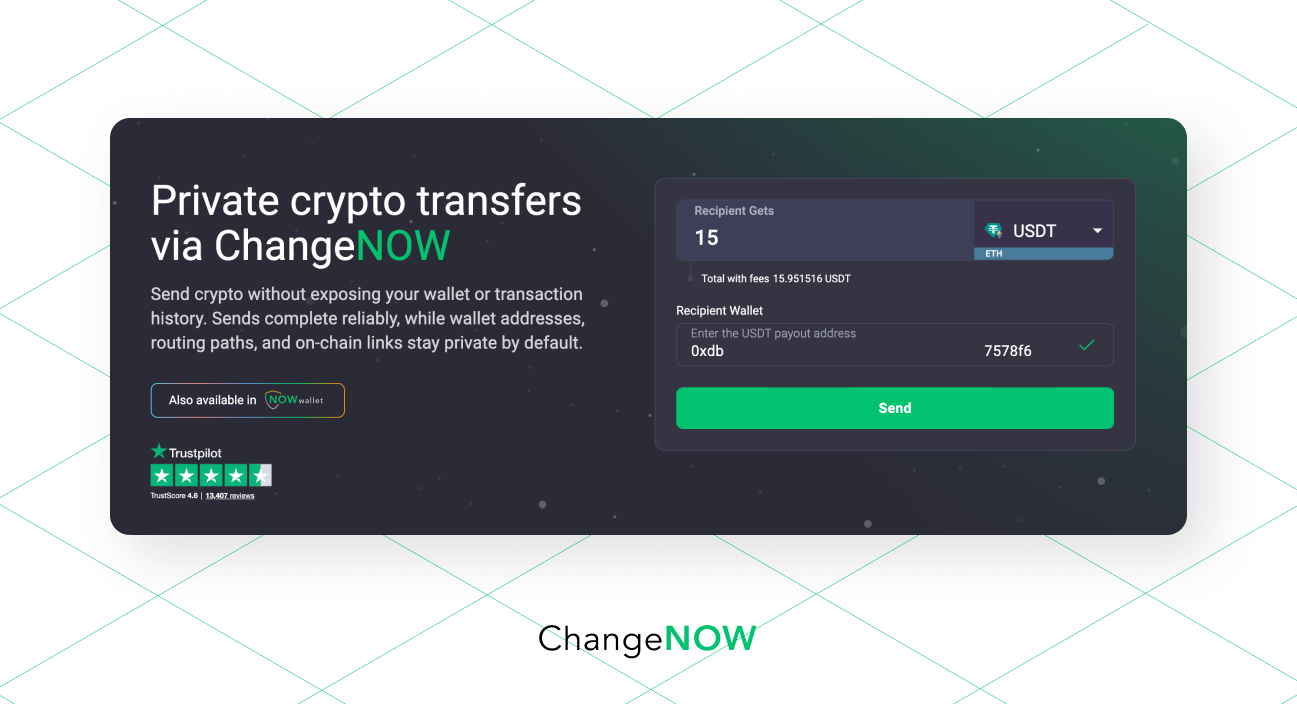 Private Transfers works with any cryptocurrency supported on ChangeNOW. Pick your asset and proceed.
Step 2: Enter the recipient's wallet address and confirm.
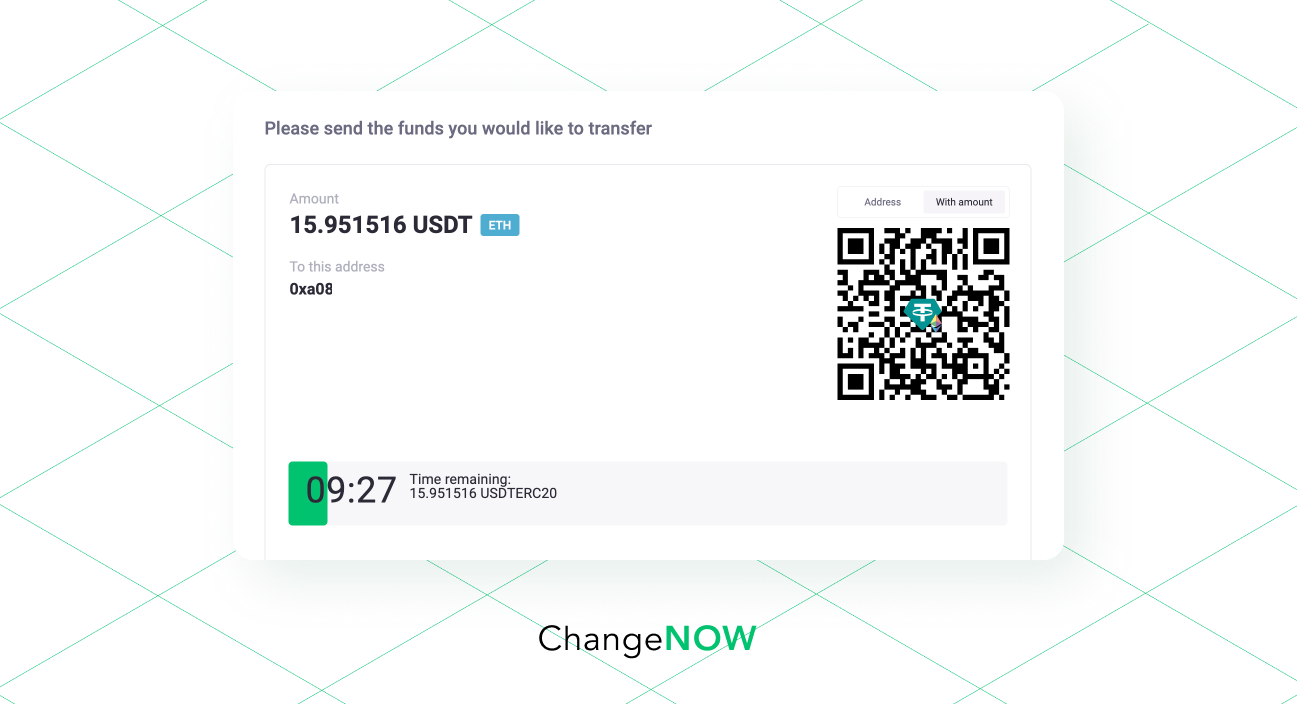 This is where the routing kicks in.
Once you send funds, ChangeNOW's private routing mechanism handles the delivery: the transaction passes through ChangeNOW infrastructure before reaching the recipient's wallet, which removes the direct address link from public records. The recipient gets exactly what was sent and nothing looks unusual on their end.
Standard precautions still apply: verify the address character by character before confirming, and make sure the network matches. Errors at this step are irreversible.
For a deeper look at how the feature works under the hood, see this piece: Private Transfers on ChangeNOW: Send Crypto With Less Exposure
Pre-Send Checklist: Before You Hit Confirm
Crypto transactions are irreversible. A minute of verification before sending is cheaper than the alternative.
- Verify the recipient address in full, not just the first and last few characters. Address poisoning attacks work by slipping a near-identical address into your clipboard or transaction history. Check the whole string, or at minimum the first six and last six characters against a trusted source.
- Confirm the network. Sending USDT on Ethereum to a USDT TRC-20 address will not arrive. Check that the network on both ends matches before proceeding.
- Use a trusted channel to share or confirm the address. If a recipient sent you their wallet address over chat, verify it through a second channel before sending anything significant. Address substitution via social engineering is one of the most common causes of irreversible loss.
- For a new recipient, consider a small test transfer first. One small transaction to confirm delivery before sending the full amount costs little and removes a lot of uncertainty.
- Screenshot or note the transaction hash after sending. Once the transfer is initiated, save the TXID. It's the only way to track or verify the transaction if anything looks off on delivery.
Summary
Crypto isn't anonymous, it's pseudonymous. Public blockchains record every transaction, and repeated behavior builds patterns over time.
Privacy in crypto means reducing how easily those patterns can be traced back to you, not making transactions disappear.
ChangeNOW's Private Transfers handles the routing, the transfer and covers the privacy aspect for you.


