

Stablecoins are no longer a crypto-native thing. They're becoming the infrastructure that moves real money between real institutions.
Mastercard just announced it's adding stablecoin settlement between card issuers and acquirers. What does it mean? Shortly, the financial institutions on both ends of a card transaction can now settle in USDC, PYUSD, RLUSD, and others, outside banking hours.
Why does it matter?
Traditional card settlement runs on bank rails. They close on weekends, add delays for cross-border transfers, and generally move at the speed of 1970s infrastructure.
Stablecoins fix the "the bank is closed" problem. You can move money across borders without a correspondent bank eating 3 days and a fee.
We broke down exactly how bad the gap between banking and blockchain is. Real transaction times, fee comparisons, and side-by-side scenarios – in our deep dive: Banks vs Blockchains in 2026. Spoiler: the difference is measured in days vs minutes.
The move wasn't random. In March, Mastercard acquired BVNK, a stablecoin infrastructure provider, for $1.8 billion. In May, Mastercard got a BitLicense from New York's NYDFS, letting them handle stablecoin transfers directly instead of routing through Circle.
More licenses = more stablecoins supported = more flexibility for the whole network.
Where does this leave businesses today?
Mastercard's move is about settling between big institutions. What about the rest of us – online stores, freelancers, SaaS products, marketplaces?
Mastercard's stablecoin settlement happens between banks and payment processors, not in your wallet. But the infrastructure is shifting. When the institutions start trusting stablecoins, it becomes easier for everyone downstream to build on top of that.
For businesses accepting payments internationally, the friction gets lower over time. For individuals sending money across borders, the rails are quietly getting faster.
The change is happening at the plumbing level.
But here's the thing: you don't have to wait for Mastercard to catch up.
How to send and receive crypto payments now?
The tools to send, receive, and accept crypto payments exist.
| Method | Best for | Speed | Setup |
|---|---|---|---|
| Crypto payment gateway | Businesses, e-commerce | Minutes | API / plugin |
| Non-custodial swap | Individuals, cross-border | 2–20 min | No setup needed |
| Stablecoin transfer | Freelancers, payouts | Minutes | Wallet only |
| Payment link / invoice | Freelancers, creators | Instant | No-code |
| POS / in-person | Retail, events | Seconds | App / QR |
While Mastercard is building rails for banks, NOWPayments has been quietly running those same rails for businesses of all sizes since 2019.
And they have a take on what this moment actually means:
"Mastercard's support for stablecoins is a big moment for the whole payments industry. While USDC, PYUSD and RLUSD are gaining traction, we still see the biggest real-world payment volumes around USDT on TRON and BNB Smart Chain due to their mature infrastructure, fast settlement and low transaction costs. We also see a growing demand from merchants for multi-stablecoin and blockchain flexibility — not just one network. The large-scale adoption of global payment providers is a clear signal that crypto payments are becoming a standard part of the global payments ecosystem."
— Kate L., CEO at NOWPayments
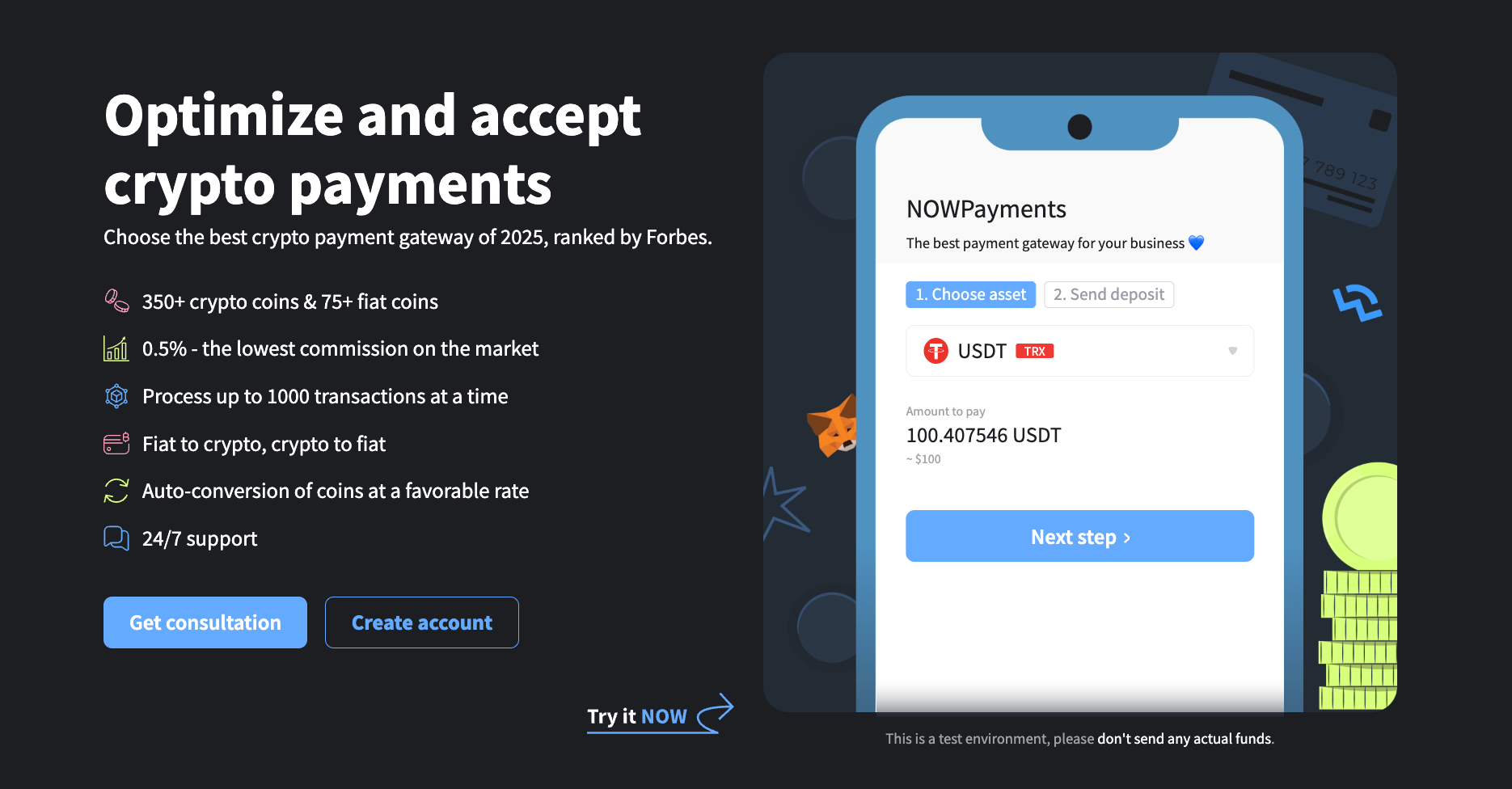
NOWPayments, part of the ChangeNOW ecosystem, already lets businesses accept crypto and stablecoin payments. You pick the stablecoin, they handle the rest: invoices, payment buttons, auto-conversion, API integrations.
Coming soon from ChangeNOW
We're putting the finishing touches on something new – a feature that's going to make accepting crypto and stablecoin payments significantly easier, both for businesses and individuals.
Think: fewer steps, more flexibility, works whether you're a solo creator or running a full operation.
Stay tuned. Follow us so you don't miss the drop.


